Understanding Why PCOS Cravings Need Support is the key to breaking the cycle of guilt and restriction. Learn how to manage PCOS cravings by honoring your biology.
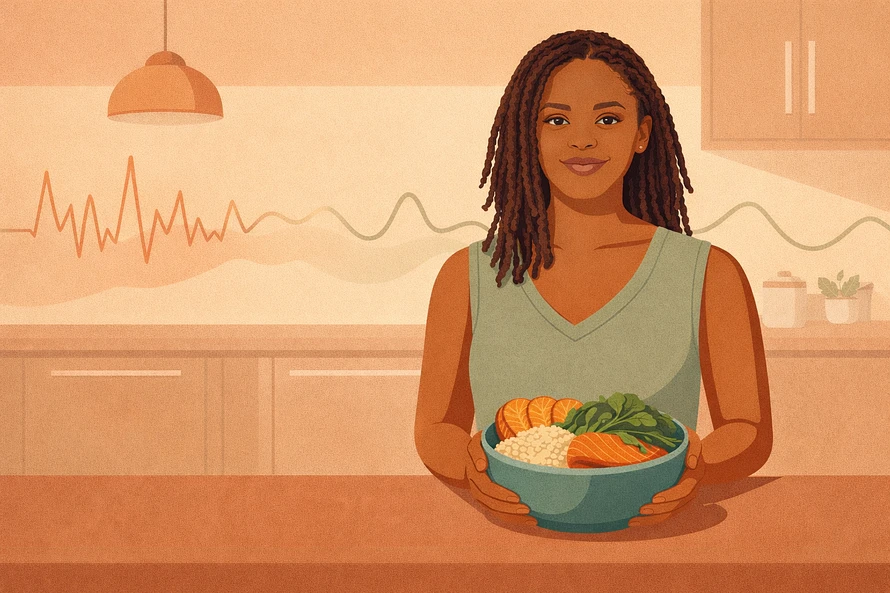
You Are Not Broken. Why PCOS Cravings Need Support, Not Control
If you live with PCOS and feel hungry all the time, especially for carbs or sugar, you probably blame yourself at least a little. You might think you lack discipline. You might think you are doing something wrong. You might think your body is broken.
It is not.
PCOS cravings come from biology. Not character. Not motivation. Not willpower.
This post explains why trying to fix cravings keeps failing and why learning to support your body changes everything.
Why PCOS Cravings Feel So Intense
PCOS affects the systems that control hunger, fullness, and blood sugar. When those systems struggle, your body sends stronger hunger signals. It does this to protect you, not punish you.
Three things drive most PCOS cravings.
Blood sugar instability
Insulin resistance makes it harder for glucose to move into your cells. When cells do not get steady fuel, your brain signals hunger. Fast. Loud. Repeated.
Hunger hormone disruption
Hormones that control fullness respond to what and how you eat. Skipping meals, under eating, or cutting carbs too low weakens those signals. Hunger feels constant instead of rhythmic.
Stress hormones
Living in restriction keeps cortisol high. Cortisol increases appetite and pushes your body to seek quick energy. This is survival biology, not a lack of control.
When all three stack together, cravings feel relentless.
Why Trying to Fix Cravings Backfires
Most advice tells women with PCOS to fix cravings by tightening control.
Eat less.
Cut carbs.
Ignore hunger.
Distract yourself.
Be stronger.
That approach creates stress inside your body. Stress worsens insulin resistance. Insulin resistance worsens hunger. Hunger drives cravings. The cycle repeats.
This is why many women say they feel out of control around food at night or after long days. The body is responding to unmet needs.
Control focuses on behavior.
Support focuses on biology.
The Shift That Changes Everything
The moment things start to improve is when you stop asking, “How do I stop cravings?” and start asking, “What is my body asking for?”
Cravings often signal one of three needs.
More consistent fuel
Better blood sugar balance
Less stress around eating
When those needs get met, cravings soften. Not instantly, but steadily.
What Support Looks Like on a Plate
Supportive eating for PCOS does not look extreme. It looks steady.
A balanced plate does three things at once.
Protein
Protein slows digestion and helps your brain register fullness. It reduces sharp blood sugar swings that trigger rebound hunger.
Fiber from vegetables
Fiber feeds gut hormones that signal satisfaction. It helps hunger feel calmer and more predictable.
Cultural carbohydrates
Carbs like sweet potato or plantain provide energy without chaos when paired with protein and fiber. Removing them often increases cravings instead of reducing them.
This combination tells your body it is safe. Safety lowers stress hormones. Lower stress improves insulin response. Hunger signals become clearer.
Why Cultural Foods Matter
Many Black women with PCOS are told to abandon cultural foods. This creates shame and disconnect.
Support does not mean erasing culture. It means pairing foods thoughtfully.
Sweet potatoes, plantains, rice, beans, and greens can all fit into PCOS supportive meals. What matters is balance, not elimination.
When food feels familiar and satisfying, the nervous system relaxes. Relaxation improves digestion and hormone signaling. This is biology at work.
The Role of Consistency
Supportive eating works best when meals happen regularly.
Skipping meals trains your body to panic.
Eating consistently trains your body to trust.
You do not need perfection. You need predictability.
Three meals. Enough food. Balanced plates.
This rhythm alone helps many women notice fewer intense cravings within weeks.
Why This Is Not About Weight
This approach is not about shrinking your body. It is about calming it.
When hunger hormones stabilize, your body can focus on repair instead of survival. Some people notice weight changes. Others do not. The goal is metabolic stability, not control.
Your worth is not measured by how little you eat.
Rebuilding Trust With Your Body
PCOS often breaks trust between women and their bodies. Hunger feels scary. Cravings feel shameful. Eating feels loaded.
Supportive eating rebuilds that trust slowly.
You eat.
Your body responds.
Hunger settles.
Confidence grows.
This is not quick. It is steady. And it works because it respects physiology.
If You Are Early in This Journey
If you are newly diagnosed or overwhelmed, start small.
Add protein to breakfast.
Do not skip lunch.
Pair carbs with fiber.
Eat without punishment.
These steps are enough to begin shifting hormones.
You do not need to overhaul your life. You need to support your biology.
Cravings are not a personal failure. They are feedback.
Your body is asking for support. When you listen, it responds.
Not through force. Through care.
If this resonated, your next step is learning which foods naturally support fullness hormones and blood sugar so cravings quiet down instead of fight back.
That is where support becomes sustainable.