The Hormone Behind the Headlines
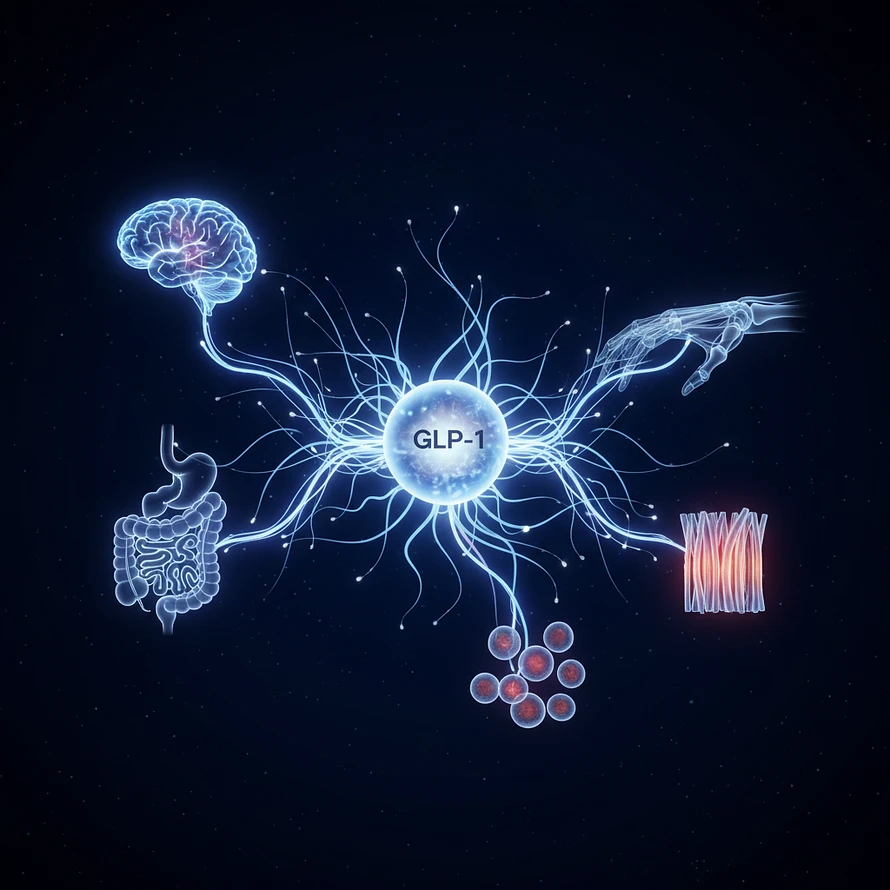
You've likely seen the headlines about GLP-1 medications and their powerful effects. But behind the buzz around these drugs lies a fascinating story about a hormone your own body produces every day. This hormone, Glucagon-Like Peptide-1 (GLP-1), is a master communicator with a reach that extends far beyond just appetite.
If you've ever felt like your body was working against you in your efforts to feel balanced and energized, understanding this single hormone may change everything. If you’ve ever wondered what’s happening on a deeper level with cravings, how stress impacts your energy, or why you feel the way you do after a meal, understanding your body's natural GLP-1 system can offer profound insights. This article moves beyond the headlines to explore five of the most surprising and impactful roles of GLP-1, helping you understand your body’s intricate inner workings a little better.
It’s a Powerful Gut-Brain Messenger (With an Unexpected Origin)
GLP-1 is a primary communication link in the "gut-brain axis," the constant conversation happening between your digestive system and your central nervous system. It sends critical information about your nutritional state from your gut directly to your brain's control centers.
This hormone is produced in two main places: by specialized L-cells lining your intestine and in a specific cluster of neurons in your brainstem called the Nucleus Tractus Solitarius (NTS).
When you eat, GLP-1 released from your gut acts on the vagus nerve—a direct hotline from your gut to your brain. This sends an urgent and rapid message about fullness and the presence of nutrients, telling your brain: "Nutrients have arrived. Stand down the hunger alerts." It’s a key reason why you begin to feel satisfied during and after a meal.
Interestingly, the journey to understanding this system has a surprising origin. A potent, long-lasting version of a GLP-1-like peptide was first discovered not in humans, but in the venom of the Gila monster lizard. This creature is known for eating very large, infrequent meals, and its unique biology provided a powerful clue that helped scientists unlock the potential of this incredible signaling system.
It Directly Interacts With Your Stress System—And It’s Complicated
The relationship between GLP-1 and your body's stress response is a fascinating and crucial two-way street. Herein lies the most important insight for anyone navigating the challenges of chronic stress.
First, GLP-1 signaling that originates in the brain can activate the Hypothalamic-Pituitary-Adrenal (HPA) axis—your body’s main system for releasing the stress hormone cortisol. GLP-1-producing neurons in the brainstem connect directly to the part of the hypothalamus that initiates this response, showing a deep, hard-wired link between metabolism and stress management.
But here is the other, more critical, side of the story. When your body is in a "fight or flight" state, the high activity of the sympathetic nervous system actually suppresses the release of GLP-1 from the L-cells in your gut.
This creates a cruel irony—a biological stress-craving trap. The very physiological state of being stressed, which often drives us to seek energy and comfort from food, is simultaneously shutting down the key hormonal signal from our gut that tells our brain we are full. It's a frustrating cycle where chronic stress actively interferes with the body’s natural ability to regulate appetite, leaving you feeling depleted and fighting against your own biology.
It Helps Tame Cravings by Re-calibrating Your Brain’s Reward Circuits
GLP-1’s influence on appetite goes far deeper than simply making you feel physically full. It has a direct effect on the motivational and reward-seeking circuits in your brain that drive cravings for highly palatable foods.
Neuroscientists often distinguish between "wanting" (the motivational drive or craving for something) and "liking" (the pleasure you get from it). GLP-1’s power lies in its ability to dial down the "wanting."
GLP-1 receptors are found in key areas of the brain's reward system, including the Ventral Tegmental Area (VTA) and the Nucleus Accumbens (NAc). When GLP-1 signals to these areas, it reduces the reinforcing properties of food, essentially dampening the intense, compulsive drive to seek it out. This recalibration is especially critical during times of stress, when the brain is naturally wired to seek out highly palatable, rewarding foods for a quick dopamine hit—a drive that can now be understood and managed at a neurological level.
It Has Unexpected Benefits for Bone and Muscle Health
Beyond energy and appetite, a well-functioning GLP-1 system contributes to the very framework that carries you through life: your bones and muscles. While often discussed in the context of weight, GLP-1 signaling has important benefits for your body's structural integrity.
Studies have shown that GLP-1 receptor activation has encouraging positive effects on bone strength and quality. This is particularly relevant during periods of weight loss, as evidence suggests that the GLP-1 system may help maintain bone mineral density (BMD), which can sometimes decrease with weight reduction.
The benefits extend to muscle health as well. GLP-1 signaling may help decrease muscle atrophy and inflammation while improving muscle endurance. By supporting both bone and muscle, this hormone plays a truly holistic role in maintaining your overall strength, vitality, and ability to move through the world with ease.
It’s Deeply Connected to Your Body’s Inflammation Signals
Chronic, low-grade inflammation is a well-known factor in metabolic challenges like obesity and insulin resistance. This state is often driven by inflammatory signals, or cytokines, such as Interleukin-6 (IL-6) and TNF-α.
Your GLP-1 system is in direct communication with your immune system. Scientific evidence shows that GLP-1 secretion is regulated by IL-6 signaling, revealing a direct link between a key inflammatory messenger and a key metabolic hormone.
This connection creates a powerful, actionable link between your stress levels and your metabolic health. We know that chronic psychological stress is a primary driver of the low-grade inflammation that elevates signals like IL-6. Therefore, managing stress isn't just a mental health practice; it is a direct physiological intervention that helps quiet the inflammatory noise that interferes with your body's natural GLP-1 system.
Nurturing Your Inner Messenger
GLP-1 is far more than a simple switch for appetite. It is the conductor of your body’s metabolic orchestra, ensuring harmony between your gut, brain, stress response, and immune system. Understanding its multifaceted role empowers you to see your health not as a series of separate issues, but as one beautifully interconnected system. By recognizing that this inner messenger is profoundly influenced by the signals we send it—through nourishment, stress management, and emotional well-being—we can move from fighting our bodies to working with them.
Knowing how deeply your natural GLP-1 system is tied to stress, inflammation, and even your brain's reward circuits, what is one nurturing action you can take this week to support your body's natural balance?