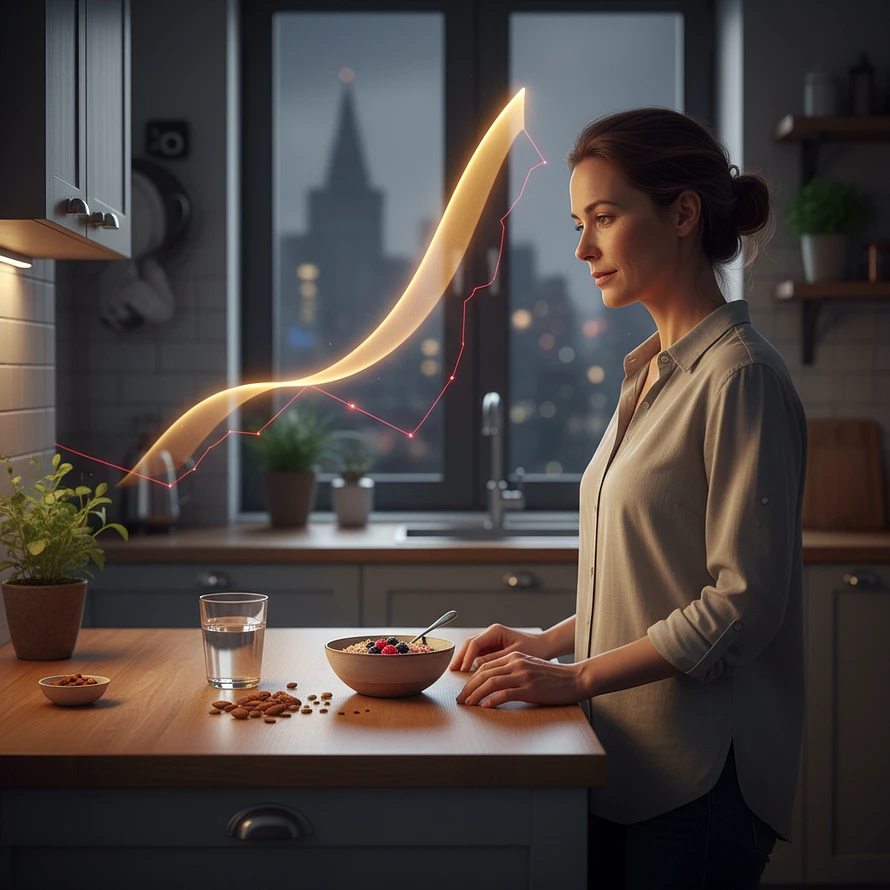
It's Not Your Willpower, It's Your Biology
It’s late, the house is quiet, and suddenly, it hits you—an intense, can’t-ignore-it craving for something sweet or starchy. For so many of us sisters with Polycystic Ovary Syndrome (PCOS), this scene is all too familiar. And with it often comes a wave of frustration and self-blame, leaving you wondering, “What am I doing wrong?”
I’m here to tell you, with all my heart, that you are not doing anything wrong. This experience is not a failure of your willpower. It’s a message from your body, rooted in the unique and powerful biology of PCOS.
In this space, we’re going to gently unpack the science behind those powerful cravings, leaving shame at the door. Together, we’ll explore five simple, empowering, and science-backed strategies to help you work with your body, not against it, to find balance and quiet those nighttime cravings for good.
Takeaway 1: Your Cravings Are a Symptom of the Blood Sugar Rollercoaster
One of the most important things to understand about PCOS is its close relationship with insulin resistance. Many women with PCOS have this condition, which simply means our body's cells don't respond as well as they should to insulin—the hormone that helps manage blood sugar.
When this happens, the body tries to compensate by producing even more insulin. This state of high insulin, or hyperinsulinemia, is a key driver of PCOS symptoms because it can stimulate the ovaries to produce more androgens (like testosterone).
This is where the cravings come in. When you eat a meal high in refined sugars or simple starches, your blood sugar can spike rapidly. Your body then releases a large amount of insulin to handle it, which often overcorrects and causes your blood sugar to crash. This "crash" sends a powerful signal to your brain: "I need more sugar, now!" This is the blood sugar rollercoaster, and that intense craving is your body’s biological attempt to get back to a stable place. It’s a powerful cycle, and it can feel relentless, but I want you to see that it's just your body trying to communicate.
Takeaway 2: It’s Not Just What You Eat, but When You Eat It
This next strategy is one of my absolute favorites to share with clients because it’s a small change that makes a huge difference, and it’s all about how you build your plate. It’s called “meal sequencing,” and it’s about the order in which you eat the components of your meal. Think of this as your strategy for smoothing out the tracks of that blood sugar rollercoaster before the ride even begins.
Here’s the simple, three-step process to follow at your next meal:
-
Start with fiber first. Begin your meal by eating your non-starchy vegetables, like a green salad, broccoli, or bell peppers. The fiber helps slow down digestion.
-
Follow with protein and healthy fats. Next, eat the protein and fat components of your meal, such as chicken, fish, tofu, or avocado. This promotes feelings of fullness and further slows down the absorption of glucose.
-
Eat carbohydrates last. By eating your starches or sugary foods (like potatoes, rice, or a piece of fruit) at the end of the meal, your body will experience a smaller, more stable blood sugar response.
This method helps to "blunt post-meal glucose spikes" and enhances the secretion of a key hormone called GLP-1, which helps you feel satisfied and full. This hormone is such a powerful ally in our PCOS journey that it deserves its own spotlight.
Interventions on the order of eating may be more readily followed than interventions on the nutritional balance of meals.
Takeaway 3: You Can Naturally Support Your "Fullness Hormone" (GLP-1)
So, let's talk more about our amazing 'fullness hormone,' GLP-1. Glucagon-like peptide-1 (GLP-1) is a natural hormone your body produces that helps control your appetite, slows down how quickly your stomach empties, and supports your overall blood sugar balance. While some popular weight-loss medications work by mimicking this hormone, you can also support your body’s own GLP-1 activity through the foods you eat.
Focusing on three key nutrient types can naturally help stimulate your body’s GLP-1 production.
-
Lean Protein: Foods like eggs, chicken, fish, beans, nuts, and tofu are powerful GLP-1 stimulators.
-
Healthy Unsaturated Fats: Incorporate sources like avocado, olives and olive oil, walnuts, and fatty fish like salmon.
-
High-Fiber Foods (especially fermentable fibers): Your gut loves these. Think oats, apples, pears, beans, lentils, chia seeds, and even cooked and cooled potatoes (which creates resistant starch).
Takeaway 4: Your Favorite Soul Food Isn't Off-Limits—It Just Needs a Glow-Up
Making lasting changes to your diet is only possible when those changes honor who you are. Your culture, your family traditions, and your comfort foods matter. Deprivation is not a sustainable path to wellness. For many of us Black women, Soul Food is central to our identity and celebrations, and you don’t have to give it up to manage your PCOS.
Instead of eliminating these cherished dishes, we can give them a strategic, PCOS-friendly glow-up. By making simple swaps, you can enjoy the comforting flavors you love while supporting your hormonal and metabolic health.
PCOS-Friendly Soul Food Swaps
Classic Dish
PCOS-Friendly Glow-Up
Fried Chicken
Oven/Air-fried chicken with a whole-grain coating.
Macaroni & Cheese
Whole-grain pasta with a creamy sauce based on butternut squash or cauliflower puree.
Cooked Greens
Flavoring with smoked paprika, liquid smoke, garlic, and onions instead of ham hocks.
Cornbread
Using almond flour or whole-grain cornmeal and adding Greek yogurt for moisture.
These adaptations allow you to retain the heart and soul of your favorite meals while keeping your blood sugar stable and reducing inflammation.
Takeaway 5: Skipping Meals Can Make Cravings Louder
I know how easy it is to let a meal slip by when life gets busy, but for our bodies, consistency is a true act of kindness. For women with PCOS, skipping meals can actually increase your risk of developing insulin resistance and set you up for more intense, harder-to-manage cravings later in the day.
Skipping meals is like intentionally sending your body to the bottom of the rollercoaster's biggest dip, guaranteeing a desperate climb back up fueled by intense cravings. Planning ahead is key. Keep balanced, protein-and-fiber-rich snacks on hand to help maintain stable blood sugar and energy levels throughout your day, preventing the rollercoaster before it even starts.
Listen to Your Body with Kindness
Managing nighttime cravings with PCOS is not about a battle of willpower. It’s about deep listening, understanding your body’s unique biology, and responding with gentle, supportive nourishment. By learning how to manage the blood sugar rollercoaster, you can quiet the noise.
These five strategies work together as a loving system for your body. You stabilize your blood sugar through how and when you eat with meal sequencing and consistency. You support your body’s natural appetite hormones with specific, nourishing foods. And you make it all sustainable by adapting, not abandoning, the cultural foods that bring you joy. It all comes back to working with your beautiful biology, not against it.
Remember, this is a journey of kindness and self-discovery, not perfection.
What is one small, supportive change you can experiment with this week to help quiet the noise and nourish your body?