Living with Polycystic Ovary Syndrome (PCOS) can feel like a constant battle against your own body. The frustration of dealing with stubborn acne, unexplained weight gain, and irregular periods is a reality for millions of women, who are often left to navigate a confusing whirlwind of conflicting diet advice on their own.
While it’s easy to get overwhelmed, managing PCOS doesn’t have to mean extreme restriction or giving up the foods you love. The key is to make small, strategic changes that address the root hormonal imbalances of the condition. Many PCOS symptoms are driven by insulin resistance, a state where your body’s cells don’t respond properly to the hormone insulin, leading to high blood sugar.
This is where simple food swaps can make a profound difference. By making smart choices, you can naturally optimize a crucial gut hormone called GLP-1 (glucagon-like peptide-1). Think of GLP-1 as your body’s built-in blood sugar and appetite manager, a system that these swaps will help you naturally support and optimize.
Here are five simple, impactful, and sometimes surprising diet swaps you can make to help stabilize your blood sugar, improve insulin sensitivity, and regain control over your hormonal health.
The 5 Diet Swaps for PCOS
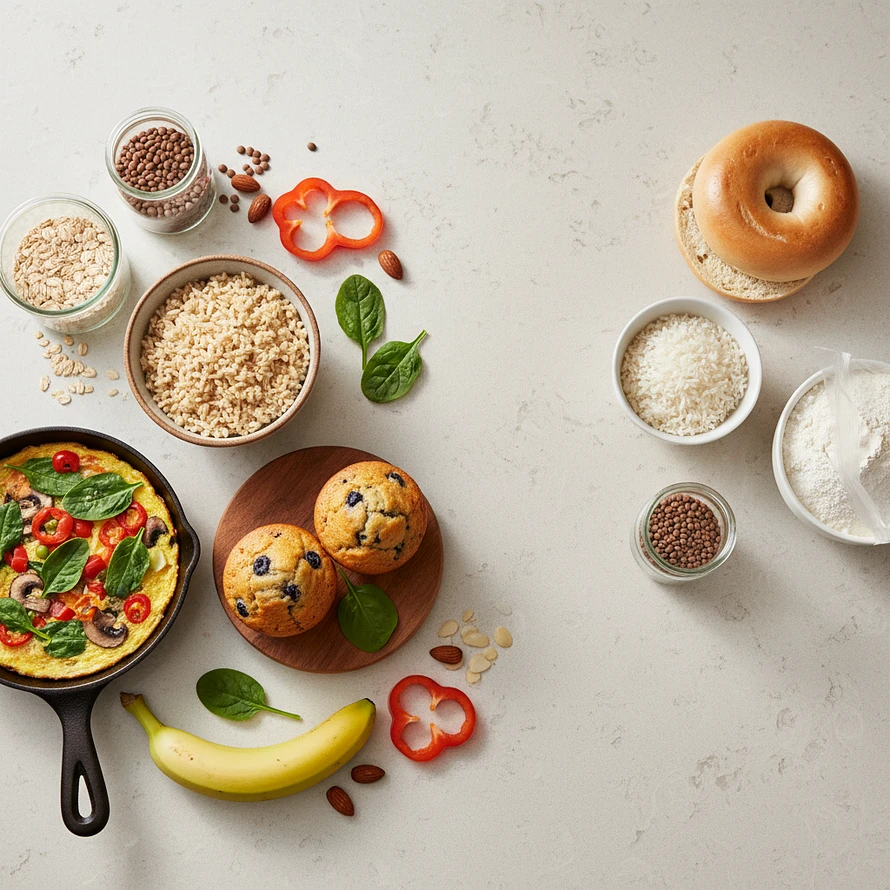
1. Swap Your Breakfast Bagel for a Veggie Omelet
This first swap is about prioritizing protein over refined carbohydrates to start your day on the right foot. A breakfast centered on refined carbs like a bagel causes a rapid spike in blood sugar, which is exactly what you want to avoid with PCOS.
A study highlighted in a 2016 review compared a bagel breakfast with a meal that contains three eggs. The results were clear: the egg-based meal was associated with lower post-meal blood glucose levels, reduced feelings of hunger, and even decreased food intake over the following 24 hours.
This is critical for managing PCOS. A high-protein breakfast helps stabilize blood sugar and improve insulin sensitivity from the very first meal of the day. Protein also triggers the release of the gut hormone GLP-1, which promotes a feeling of fullness and helps manage appetite, setting you up for a day of balanced energy and fewer cravings, two key goals in managing PCOS symptoms.
2. Swap White Rice for Brown Rice (It's More Than Just Fiber)
This swap is a classic for a reason, and it comes down to a concept called the Glycemic Index (GI). The GI is a measure of how quickly a food raises your blood sugar. High-GI foods are digested quickly, causing sharp spikes in both blood glucose and insulin. This constant demand on the pancreas not only worsens insulin resistance but can also disrupt the delicate balance of other hormones, including androgens, that contribute to PCOS symptoms like acne and hirsutism.
White rice, for example, has a high GI of 85. In contrast, lower-GI alternatives like brown rice release glucose into the bloodstream more slowly and steadily. Research has shown that low-GI diets are an effective intervention for providing insulin resistance relief in those with PCOS.
Here are a few other simple low-GI swaps to try:
-
Swap a white potato for a sweet potato.
-
Swap white bread for a grainy wholemeal, rye, or sourdough variety.
3. Swap Wheat Flour for Almond Flour for Hormone-Friendly Treats
For anyone who loves to bake, this swap is a game-changer. It may seem surprising, but trading traditional wheat flour for almond flour can transform a treat from a hormone-disrupting indulgence into a PCOS-friendly pleasure.
The difference in their impact on blood sugar is dramatic. Wheat flour has a high glycemic index of 71, while almond flour has a GI of under 1. The reason is simple: almond flour is made from ground nuts, so it’s primarily composed of protein and healthy fats with minimal carbohydrates. For perspective, a half-cup of wheat flour contains over 76 grams of carbohydrates, while the same amount of almond flour contains less than 20 grams and significantly more fiber, protein, and healthy fats. This composition prevents the sharp insulin spike that’s associated with grain-based flours, allowing you to enjoy baked goods without throwing your hormones out of balance, a core goal of any effective PCOS diet.
4. Swap Your Food Order: Eat Carbs Last
This powerful strategy isn’t about changing what you eat, but when you eat it—and it costs absolutely nothing to implement. The concept, known as meal sequencing, involves consuming the protein, fat, and fiber (vegetables) in your meal before you eat the carbohydrates.
Research shows that this simple behavioral swap can have a significant impact on your hormones and blood sugar. Eating protein and vegetables first promotes the secretion of the gut hormone GLP-1, which in turn delays gastric emptying (how quickly food leaves your stomach) and significantly reduces the glucose spike after your meal. This simple behavioral change effectively turns your meal into a tool to enhance your body's own GLP-1 response, achieving a similar, albeit milder, effect to what GLP-1-based medications aim to do.
"Starting with vegetables, protein and healthy fats, before eating starches or sugary foods, may help blunt post-meal glucose spikes."
5. Swap Refined Starches for 'Resistant' Starches to Support Your Gut
Not all starches are created equal. Unlike refined starches that are quickly broken down into sugar, resistant starch is a type of fermentable fiber that resists digestion in the small intestine. Instead, it travels to the large intestine, where it becomes food for your beneficial gut bacteria.
This fermentation process is incredibly beneficial for PCOS management. As your gut microbes feast on the resistant starch, they produce compounds called short-chain fatty acids (SCFAs). These SCFAs then stimulate the release of GLP-1. Research in rodents has shown this effect is particularly powerful, stimulating GLP-1 secretion in a "sustained day-long manner." This makes resistant starch a powerful tool not just for managing a single meal's blood sugar, but for cultivating a gut environment that consistently supports better hormonal regulation throughout the day.
You can increase your intake of resistant starch with foods like green-tipped bananas, oats, legumes, and cooked-and-cooled starches like potatoes and rice (the cooling process increases resistant starch content).
Your Next Step
These five swaps, choosing protein for breakfast, opting for low-GI carbs, baking with almond flour, sequencing your meals, and incorporating resistant starch, are powerful tools for managing PCOS.
Each of these swaps is a direct way to communicate with your body, using food to foster hormonal harmony and reclaim control over your well-being. By focusing on stabilizing blood sugar and enhancing your natural satiety signals, you can move toward clearer skin, more regular cycles, and a renewed sense of empowerment over your health.
Which of these simple swaps will you try this week to start your journey toward better hormonal balance?